


Okay, so check this out—browser extension wallets used to feel a little sketchy to me. Wow! I mean, you’re connecting something that controls money directly inside a browser tab. My instinct said “be careful” the first hundred times I tried one. But after living with extensions for months, and poking at a lot of UX and security trade-offs, I started to see the scenario differently. Long story short: extension wallets can be very practical for DeFi when they prioritize transaction clarity and permission control, and Rabby does a few things that made me keep it around.
Short sentence. Then a medium thought to settle things. And a longer one that tries to explain why I care so much about the tiny details of confirmations and token approvals, because those tiny details are where most people lose money if they’re not careful—it’s not just a UI thing, it’s a safety net that actually catches poor UX and dumb defaults before they become a problem.
Here’s the thing. Extensions are convenient. Really convenient. But convenience without guardrails is dangerous. Seriously? Yep. You can lose funds because of a single blind click. So when an extension gives you clear, layered information about what a transaction will do, and makes it easy to refuse or edit permissions, that reduces real-world risk. Initially I thought all extensions were basically the same, but then I started tracking behaviors at the transaction level, and that changed my mind. Actually, wait—let me rephrase that: at first glance they looked similar; then I started testing edge cases and deception vectors, and a few wallets separated from the pack.
I’m biased, by the way. I like tools that feel pragmatic rather than shiny. This part bugs me: some wallets focus too much on “onboarding flair” and not enough on “what happens after you click confirm.” (oh, and by the way—this is where a lot of phishing and approval-exploitation comes from.)
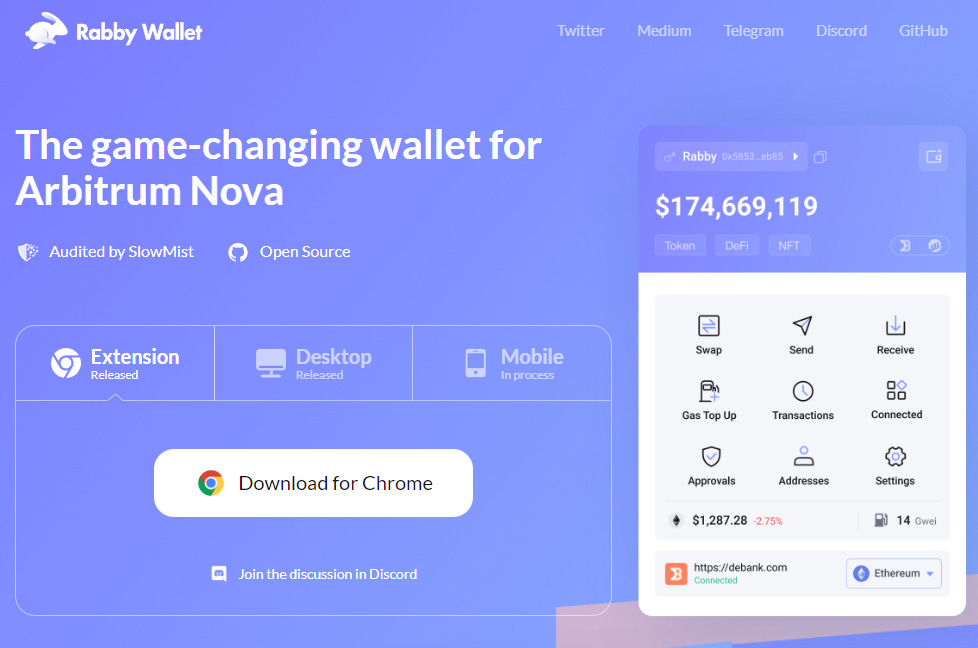
What I look for in an extension wallet
Quick checklist—this is a bit me talking out loud, but useful: clear transaction simulation, granular token allowance control, the ability to manage multiple accounts and chains without confusion, and a good activity/history view so you can audit past approvals. Hmm… sounds simple, but it’s not. One small mislabel or a hidden checkbox can cost someone real dollars. For a practical download and to try Rabby yourself, click here.
Why those checks? Because DeFi isn’t just about sending ETH or tokens. It’s about complex interactions: swap calls with slippage, router approvals, staking functions that route funds through multiple contracts. You need to be able to see the intent clearly. On one hand the blockchain is transparent; on the other hand UI translations of smart contract calls can be opaque or misleading. That contradiction is exactly why I invest time in wallet hygiene—because the UI is the last mile between you and complex on-chain logic.
Whoa! Small tangent: I once watched a friend approve unlimited allowances for a small dApp, because the prompt said “Approve token” and nothing about “unlimited.” He lost tokens to a later exploit. That stuck with me. Something felt off about how approvals are presented in many wallets—too terse, too trusting. Rabby, in my use, nudges you toward specificity more often, though it’s not perfect. I’m not 100% sure about every edge case, but I liked that it highlights allowances and gives more readable summaries of transactions.
On usability: the extension sits in your browser, which is both a strength and a risk. Strength because you get instant, integrated dApp access; risk because browsers have a wide attack surface. So I run extensions with strict tab hygiene—separate windows for sensitive work, and I avoid linking wallets to untrusted sites. My routine is simple but effective: check the transaction text, validate the contract address when necessary, and reduce long-lived approvals unless I really need them. Sounds obvious, but in practice people skip steps when the UI encourages speed.
Something else: transaction simulation. Not all wallets simulate transactions inside the extension, and not all simulations are equally helpful. A good simulation will tell you whether a swap will route through multiple pools, what the expected token delta is, and whether a contract call will do an allowance change. Rabby’s approach to showing more context (again, my observation) helps demystify some of the things that otherwise become “unknowns” to a casual user. On the flip side, detailed simulations can be overwhelming—so it’s a balance between depth and clarity.
I’ll be honest: the more I used Rabby, the more I appreciated subtle usability improvements. Somethin’ about showing the contract method name and the raw input parameters side-by-side…it’s calming. You can learn to skim faster and spot suspicious approvals quicker. That said, I still use other tools in tandem—for deep auditing, I paste data into separate explorers or use script-based analyzers. This isn’t an either/or; it’s layered defense. Very very important to think like that.
Security posture matters. Extension wallets can isolate the private key in the extension sandbox, but that sandbox lives in a browser process that may have other attack vectors. So the best practices are: keep your browser updated, restrict other extensions you trust, use hardware keys when possible, and keep seed phrases offline. On one hand Rabby and similar extensions do a lot with UX and alerts. Though actually, no tool removes the need for user caution—education matters as much as features.
On cross-chain features: I use multiple chains, and the best wallet experience blends them without making me guess where a token lives. Tools that auto-detect chain mismatches or warn you before a chain switch have saved me from sending a token to the wrong network. Rabby’s chain switching is quick, and it shows confirmations before switching context—which sounds small, yet it’s one less “surprise” during dApp flows.
One small gripe—transaction notifications. Some extensions over-notify, flooding you with modal dialogs for every tiny event; others hide confirmations deep under layers. The sweet spot is a clear, contextual modal that describes the core action (swap, approve, call) and gives you a straightforward accept/deny choice. I prefer things that err on the side of making me stop and think. Again—this is personal. You’re allowed to disagree.
On development transparency: open-source code gives me a level of confidence because it allows independent audits and community scrutiny. I won’t pretend to have audited any wallet’s full stack single-handedly. But seeing active issue trackers and community conversations matters. It’s a signal more than a guarantee. Initially I thought seeing the repo was enough; then I realized you want active contributors, recent commits, and public security disclosures. That nuance matters.
Here’s a quick practical workflow I recommend: (1) use an extension like Rabby for day-to-day DeFi interactions, (2) separate large holdings into cold storage or hardware wallets, (3) use allowance managers to set finite approvals, and (4) validate complex transactions in an external simulator if the amount is material. You might think that’s overkill. Hmm… maybe. But the people I know who lost funds skipped one of those steps.
On performance: I care about latency and how long confirmations take to load in the UI. A slow wallet leads to impatience, then to bad UX decisions—people refresh, click, re-sign. A responsive extension reduces cognitive load, which translates into fewer mistakes. Rabby felt responsive in my testing, and its activity history helped me rewind and understand where something went wrong when it did.
Okay, to wrap up—not in the artificial way articles always do, but honestly—browser extension wallets are a powerful interface to DeFi, with real trade-offs. If you want convenience, use an extension but be deliberate about approvals and habits. If you want layered safety, combine a careful extension like Rabby with hardware devices and external auditing tools. On one hand it’s easy; on the other hand the ecosystem still demands respect and caution. My takeaways: move slow, label permissions, and treat every “approve” as a potential risk until proven otherwise.
FAQ
Is a browser extension wallet safe for everyday DeFi?
Short answer: yes, if you follow good practices. Use finite token approvals, keep your browser and extensions minimal, and consider hardware wallets for larger positions. Also, get comfortable reading transaction details—confirmations are your best friend.
What makes Rabby different from other extension wallets?
From my hands-on use: Rabby emphasizes clearer transaction context and allowance visibility, which helps reduce accidental over-approvals. It’s not magic, but it nudges safer behavior. Again, I’m not claiming it’s perfect—it’s just one pragmatic tool in a layered defense strategy.
Should I store all my crypto in an extension wallet?
No. Keep spending balances in an extension for convenience, but move significant holdings to cold or hardware storage. Extensions are great for active use, not for long-term vaulting of large portfolios.